The Everyday Commuter Emergency Kit: A Practical Roadside Checklist
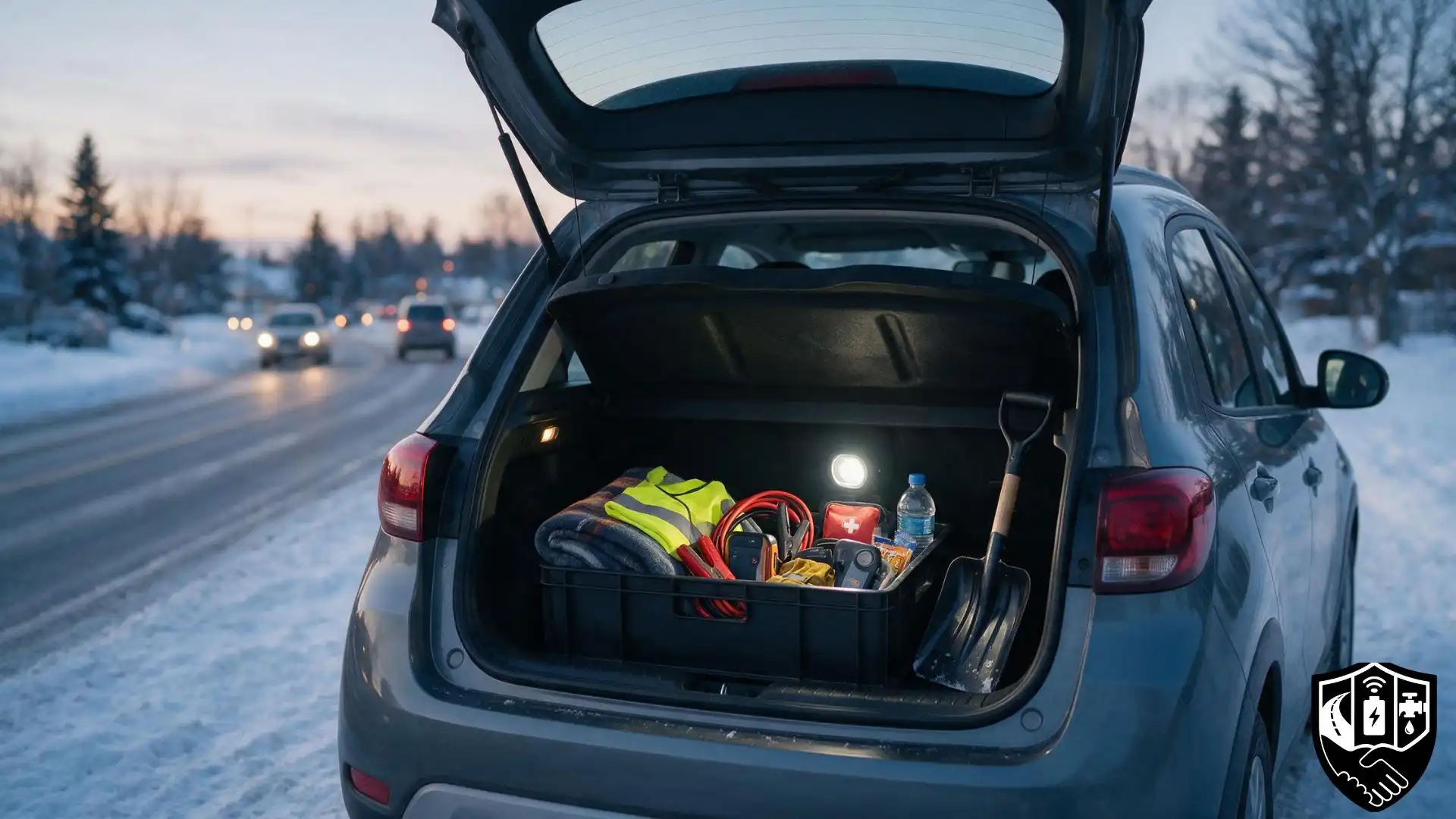
Introduction
Unlike heavy multi-day survival packs, a commuter emergency kit needs to be compact, affordable, and easy to reach. Whether you face a dead battery on a freezing morning, a sudden flat tire, or brief gridlock, having the right tools in your vehicle keeps minor roadside disruptions from turning into major dangers.
Key Takeaways
- Accessibility Matters: Keep survival tools inside the cabin within arm's reach, not locked in the trunk.
- Focus on the Big Four: Cold weather, low batteries, flat tires, and dark shoulders cause the vast majority of commuter delays.
- Pack Smart: Freeze-proof your water storage and secure trunk items in a single crate to save cargo space.
1. Essential Gear (Keep in the Cabin)
Store these items in your glove box, center console, or door pockets so you can reach them without leaving your seat.
- 12V Phone Charger & Compact Power Bank: Cold temperatures drain phone batteries rapidly.
- High-Vis Safety Vest: Put this on before stepping onto a busy shoulder or highway.
- LED Headlamp or Compact Flashlight: Hands-free lighting makes changing a tire or checking under the hood in the dark much safer.
- Car Multi-Tool: Must include a seatbelt cutter and glass breaker for emergency extraction.
Pro Tip: Keep your glass breaker and seatbelt cutter inside the driver’s side door pocket—never in the trunk or buried under seat clutter.
2. Vehicle Readiness & Self-Recovery (Trunk Storage)
Keep these items in the trunk to manage common mechanical and traction issues while waiting for help.
| Item Category | Recommended Gear | Primary Purpose |
| Power & Electrical | Booster Cables or Compact Lithium Jump Starter | Fix dead batteries (the #1 commuter breakdown cause) |
| Tire Maintenance | 12V Portable Tire Inflator | Quick fix for sudden pressure drops without a gas station |
| Snow & Ice Removal | Folding Shovel & Ice Scraper / Brush | Clear snowbank buildup and dig out packed tires |
| Traction Control | Coarse Sand or Non-Clumping Cat Litter | Provides immediate grip on slippery patches |
| Hand Protection | Heavy-Duty Work Gloves | Protects hands from cold metal, sharp parts, and grime |
3. Personal Comfort & Short-Term Survival
Supplies to keep you warm, hydrated, and safe if you are stranded for 1–2 hours waiting for roadside assistance.
Heavy Warm Blanket or Mylar Thermal Blanket: Retains critical body heat if you must turn off the engine to save fuel.
Spare Warm Layer: Pack an extra beanie/toque, thick socks, and water-resistant gloves.
Water & Non-Perishable Snacks: Pack 1–2 water bottles (fill to 80% capacity so the container doesn't burst when frozen) alongside high-energy protein bars, nuts, or jerky.
Compact First Aid Kit: Ensure it includes standard adhesive bandages, antiseptic wipes, sterile gauze, and basic pain relievers.
Frequently Asked Questions
Q: How do I stop my emergency gear from sliding around the trunk?
A: Store all trunk items inside a single collapsible tote bag or plastic crate, then secure it against the back seats using a bungee cord.
Q: How often should I inspect my car emergency kit?
A: Inspect your kit twice a year—ideally when changing seasons (spring and autumn)—to check power bank charge levels, swap out expired snacks, and adjust clothing layers.
Next Steps & Action Plan
Building a functional roadside kit doesn't require a large budget. Start by gathering the items you already own, pack your cabin console first, and store the rest neatly in your trunk before your next commute.
Looking for more practical vehicle maintenance guides? Browse our latest driver safety resources to keep your commute stress-free.